
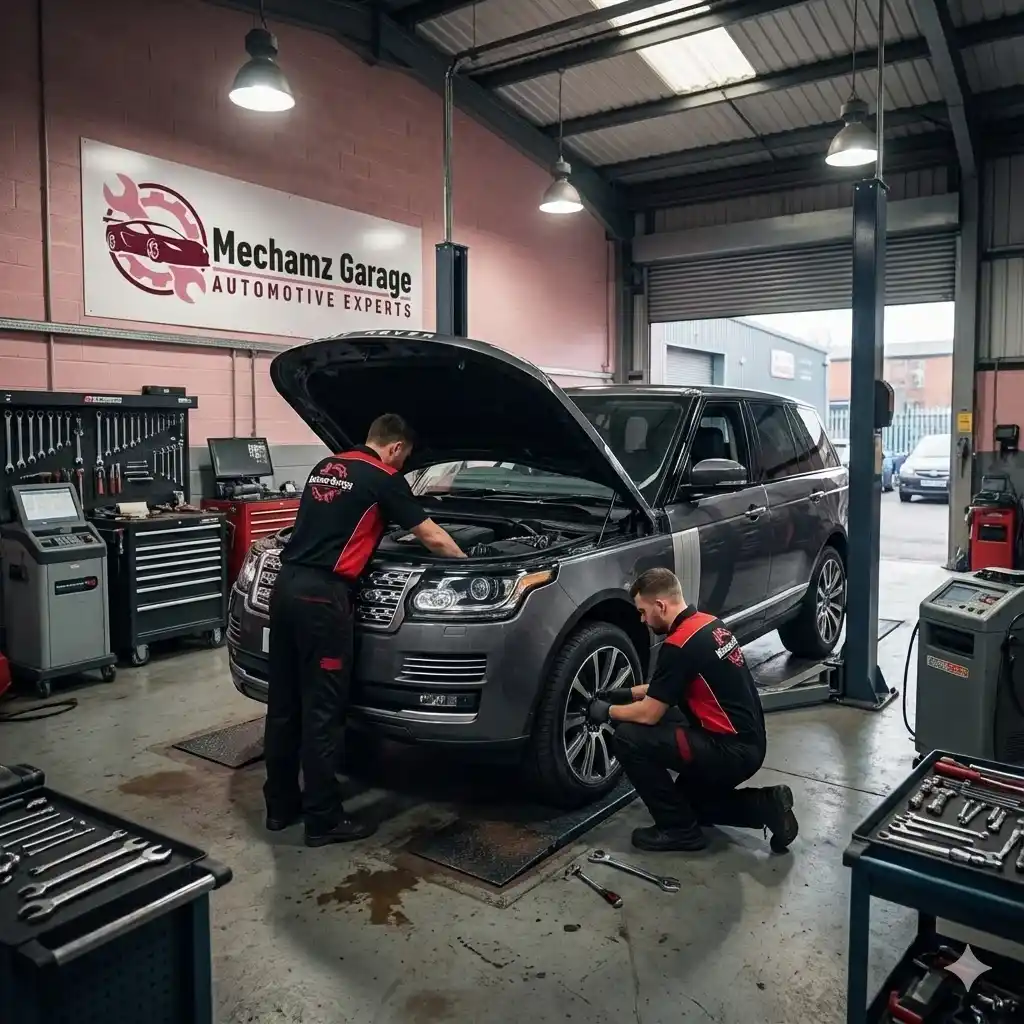
At Mechamz Garage in Halesowen, we frequently help drivers understand one of the most critical—but least understood—parts of their vehicle’s engine: the timing chain. Unlike a timing belt that requires routine replacement, a timing chain is designed to last the life of the engine. However, timing chain problems do occur, and when they do, they can lead to serious engine damage if not addressed promptly.
This guide will help you understand:
- What a timing chain is and how it works
- Common timing chain problems and symptoms
- Causes of timing chain failure
- How timing chain issues are diagnosed
- Solutions and replacement procedures
- How Mechamz Garage handles timing chain replacement for all vehicle brands
- FAQs about timing chains
- A conclusion highlighting best practices and next steps
Whether you’re a careful car owner in Halesowen or someone noticing unusual engine behavior, this post will help you make the right decisions for your vehicle.
What Is a Timing Chain?
A timing chain is a critical engine component that synchronises the rotation of the crankshaft and camshaft(s). It ensures that the engine’s valves open and close at exactly the right time during each cylinder’s intake and exhaust strokes.
Unlike a rubber timing belt, which often needs changing every 60,000–100,000 miles, a timing chain is a metal chain designed to be more durable. However, that doesn’t make it indestructible.
How a Timing Chain Works
Inside the engine, the timing chain connects the:
- Crankshaft – Converts the up-and-down motion of pistons into rotational motion
- Camshaft(s) – Opens and closes the engine’s valves
The chain rotates around gears and is kept tensioned by guides and a tensioner (often hydraulic). When everything works smoothly, the engine runs efficiently, with perfect valve timing for fuel intake, compression, combustion, and exhaust phases.
Why Timing Chain Problems Matter
A worn or failing timing chain can lead to poor engine performance, misfires, engine noise, and in extreme cases, catastrophic engine failure. Unlike timing belts, timing chains often break without clear warning, so it’s vital to recognise the early symptoms.
Common Timing Chain Issues & Symptoms
Here’s how timing chain problems typically present themselves:
1. Rattling or Clattering Noise from the Engine
One of the earliest and most common signs of timing chain wear is a rattling or clattering noise, especially at idle or during start-up. This indicates excessive slack in the chain.
2. Engine Misfires
Bad timing caused by a loose chain can lead to irregular spark timing, which often causes engine misfires, rough idling, or poor acceleration.
3. Check Engine Light (CEL)
Your car’s computer may detect timing irregularities and trigger the Check Engine Light. Codes related to timing can point technicians toward a timing chain issue.
4. Metal Shavings in Engine Oil
A worn chain can shed metal fragments, which end up circulating in the engine oil. Finding metal shavings during an oil change is a serious warning sign.
5. Loss of Power and Poor Fuel Economy
Because timing affects combustion efficiency, a failing chain can lead to reduced engine power and worsened fuel economy.
6. Difficulty Starting the Engine
In severe cases, the engine may struggle to start—or refuse to start at all—due to improper timing.
Common Causes of Timing Chain Wear or Failure
Although timing chains are designed to last, several factors can accelerate wear:
🔹 Poor Oil Maintenance
Timing chains rely on clean, properly graded oil for lubrication. Delayed oil changes or incorrect oil grades cause increased friction and wear.
🔹 Weak or Faulty Tensioners
The tensioner maintains chain tightness. If the tensioner fails, the chain can become loose and skip teeth.
🔹 High Mileage & Age
Over time and high mileage, even well-maintained timing chains can stretch.
🔹 Engine Contamination
Sludge buildup from dirty oil or overheating accelerates wear on the chain and guides.
Timing Chain vs. Timing Belt – What’s the Difference?
| Feature | Timing Chain | Timing Belt |
|---|---|---|
| Material | Metal chain | Rubber belt |
| Maintenance | Usually lasts long distance | Must be replaced at regular intervals |
| Noise | Can be noisier when worn | Generally quieter |
| Failure Consequence | Serious engine damage | Also serious, but replacement intervals predictable |
Understanding this difference helps you appreciate why chain issues require rapid professional attention rather than DIY fixes.
How Timing Chain Problems Are Diagnosed
Diagnosing a timing chain issue is a meticulous process that trained technicians perform using specialized tools and experience. Here’s how we do it at Mechamz Garage:
🔍 Step 1: Listen for Unusual Engine Noises
We start by listening to your engine at idle and under load, checking for rattles or clatter that suggest chain slack.
🔍 Step 2: Scan Engine Codes
A diagnostic scan retrieves trouble codes (if present) that can indicate timing irregularities.
🔍 Step 3: Inspect Timing Components
Using visual inspection and sometimes removing engine covers, we evaluate the chain, tensioner, guides, and sprockets.
🔍 Step 4: Oil Analysis
If metal particles are found in your oil, we consider contamination a strong sign of chain wear.
From there, we provide a clear report and recommend the best course of action.
Solutions: Timing Chain Replacement & Repair
Once a timing chain issue is confirmed, replacement is often the only reliable long-term solution. Here’s what we do:
🔹 Remove Engine Timing Cover
The cover is taken off to access the timing chain assembly.
🔹 Inspect Chain, Tensioners & Guides
All components are examined. It’s standard practice to replace the chain, tensioner, and guides together, as a worn chain with old guides leads to repeat failure.
🔹 Install New Timing Chain Kit
We use quality OEM or high-grade replacement parts specific to your vehicle make and model. This ensures proper fit and long life.
🔹 Set Proper Timing
With precision tools, we align the crankshaft and camshaft(s) according to manufacturer specifications.
🔹 Test & Verify
After assembly, we test the engine under multiple conditions to ensure smooth performance and accurate timing.
For a full overview of the mechanical services we provide, visit our Garage Services page.
Timing Chain Replacement for All Vehicle Brands
At Mechamz Garage, we have experience replacing timing chains on a wide range of vehicle brands, including (but not limited to):
✔ Ford
✔ Vauxhall
✔ Volkswagen (VW)
✔ BMW
✔ Mercedes-Benz
✔ Audi
✔ Toyota
✔ Nissan
✔ Honda
✔ Peugeot
✔ Citroën
✔ Renault
Whether your car is European, Japanese, or American, our technicians know the specific requirements and timing specifications for each engine type. We handle both rear-wheel drive and front-wheel drive engines across petrol and diesel variants.
Why You Shouldn’t Delay Timing Chain Repairs
Delaying timing chain repairs can cause the chain to skip teeth or break entirely. When that happens, valves and pistons may collide, leading to severe engine damage that can cost thousands to fix—far more than timing chain replacement.
Cost Factors for Timing Chain Replacement
Several factors influence the cost of timing chain replacement:
- Make and model of the vehicle
- Complexity of engine layout
- Additional components (guides/tensioners)
- Labour time
At Mechamz Garage, we provide clear, upfront estimates and explain every part of the process so you know exactly what you’re paying for.
How to Prevent Timing Chain Issues
Although timing chains are durable, you can prolong their life by:
✔ Changing engine oil at recommended intervals
✔ Using the correct oil type and grade
✔ Avoiding extended idling and overheating
✔ Addressing unusual engine noises early
✔ Regular inspections by professionals
Regular servicing is essential for engine longevity—and our team at Mechamz Garage is here to help you with routine maintenance and long-term care.
9 Frequently Asked Questions (FAQs)
1. How long does a timing chain last?
A timing chain is designed to last the life of the engine, but wear can occur with high mileage, poor maintenance, or faulty tensioners.
2. Can a timing chain be repaired without replacement?
Minor slack might be addressed by replacing tensioners and guides, but a stretched chain usually requires full replacement.
3. How do I know if my timing chain is failing?
Look for rattling noise at idle, engine misfires, metal shavings in oil, poor performance, or a lit Check Engine Light.
4. Is timing chain replacement covered under warranty?
Coverage depends on vehicle age, mileage, and the specific warranty terms. Check with your vehicle manufacturer or warranty provider.
5. How long does replacement take?
Timing chain replacement can take several hours to a full day, depending on engine design and accessibility.
6. Can I drive with a bad timing chain?
It’s not recommended. Driving with a failing chain can lead to engine damage and leave you stranded.
7. What types of parts are used for replacement?
We use high-quality OEM or equivalent parts, including chains, tensioners, guides, and seals.
8. Does every engine have a timing chain?
No—some vehicles use timing belts. Always consult your owner’s manual or a professional.
9. Why choose Mechamz Garage for timing chain service?
Our experience, trained technicians, transparent pricing, and commitment to quality make us a trusted choice in Halesowen.
Conclusion
The timing chain is one of the most vital—and often overlooked—components of your engine. When it starts to fail, recognising the symptoms early and getting professional help right away can save you from expensive engine repairs down the line.
At Mechamz Garage in Halesowen, we provide expert timing chain diagnosis and replacement services for all major vehicle brands. We use quality parts, proven procedures, and meticulous testing to ensure your engine runs smoothly and reliably.
If you suspect a timing chain issue or want to schedule an inspection, we’re here to help. Our team is committed to delivering honest advice, reliable repairs, and long-lasting performance.
👉 Visit us at Mechamz Garage
👉 Learn more about all our automotive services: Garage Services
